
Sometimes the most beautiful things happen spontaneously. A few months ago, after I appeared on the morning show on national TV (RTS), I received a message from a man who, like me, has quadriplegia. In his message, Bane wrote that his mother helps him every day by manually tapping his bladder so it can empty, and that over time this had become extremely exhausting and difficult for her. He asked me if I had any idea how that process could be made easier.
Actually, I had thought about this years ago, but I never made anything because I personally didn’t need it. However, as soon as I read his message, the idea came together in my mind – as if it had been waiting for its moment.
Developing the idea and testing the solution
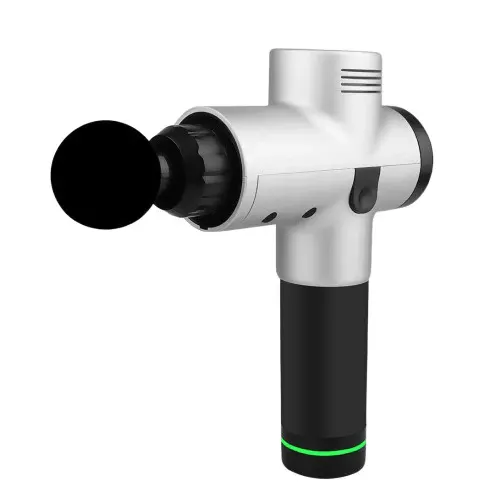
Before we arrived at the final design, Bane had already tried several devices. First, he used a fitness electro-massager in an attempt to stimulate bladder emptying. However, that device had almost no piston stroke to provide mechanical stimulation, so it produced no real effect – and the results were disappointing.
Later, he ordered an ultrasonic bladder stimulator from the UK, a device designed for such purposes, but again there was no improvement.
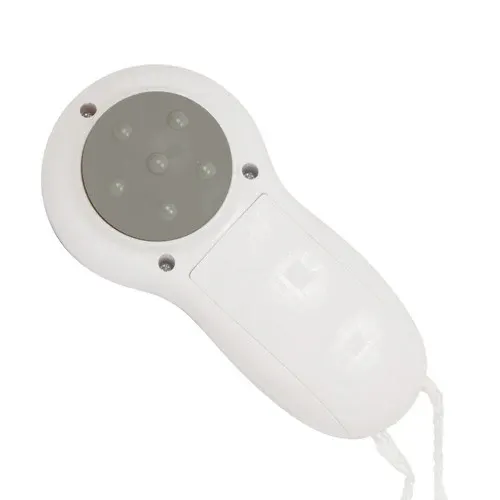
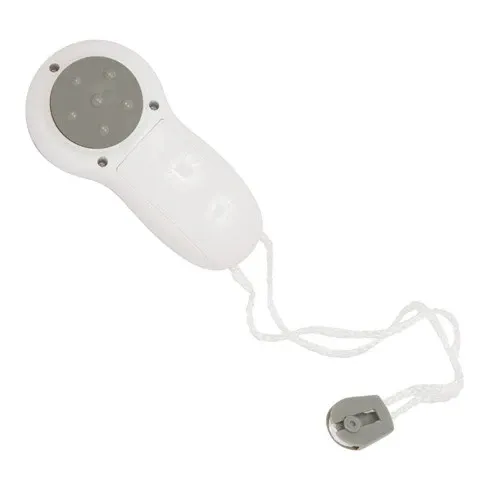
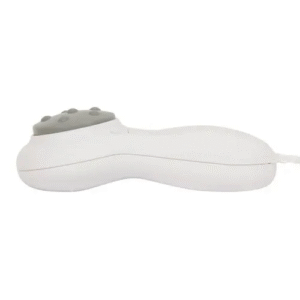
After those attempts, we both agreed that the solution had to physically imitate the tapping motion of a human hand – just like caregivers usually do.
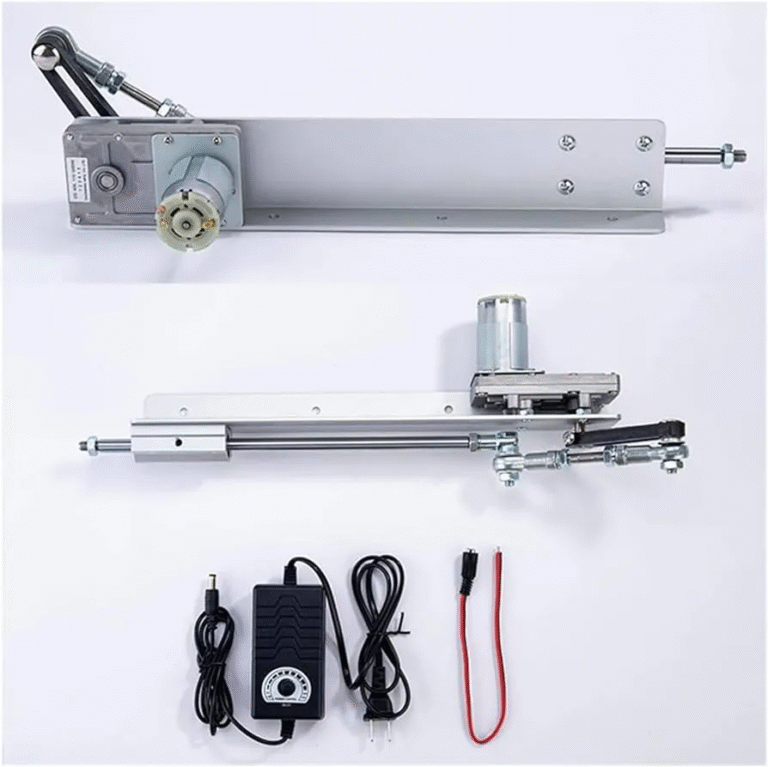
I suggested making a simple mechanical assembly with an electric motor and a reciprocating rod, with a tennis ball at the tip – so that the tapping would be soft and comfortable. I sent him links to the necessary parts that could be ordered online, along with a brief description of how to connect them. A few days later, he told me he had placed the order. The journey from idea to realization took some time, as he first ordered the wrong part and had to reorder.
Then, just a few days ago, he sent me photos and a video of the completed system, assembled with the help of his brother and their friend, engineer Zoran Nagulić. They made a height- and width-adjustable stand that can be placed beside the bed. A nice detail is the rubber feet that prevent the floor from getting scratched, and the speed control knob is conveniently positioned.
After a few minor adjustments, the system worked perfectly on the first try – and now it operates reliably and without physical effort, finally relieving Bane’s mother of that demanding daily task, which was the main goal from the beginning.
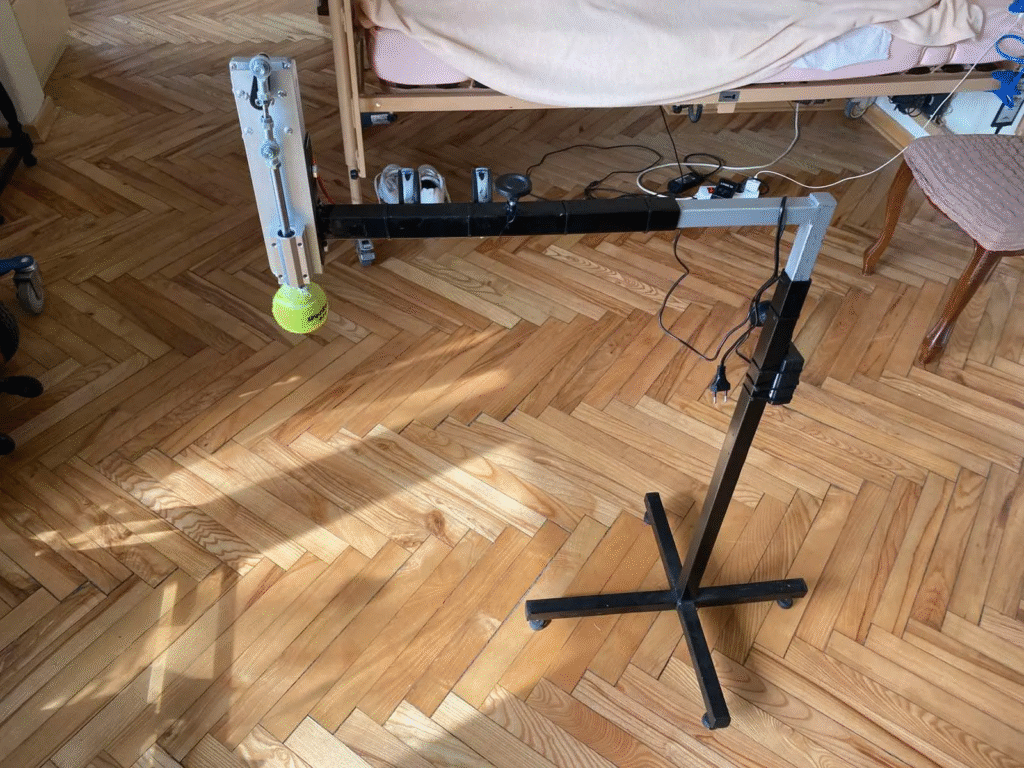
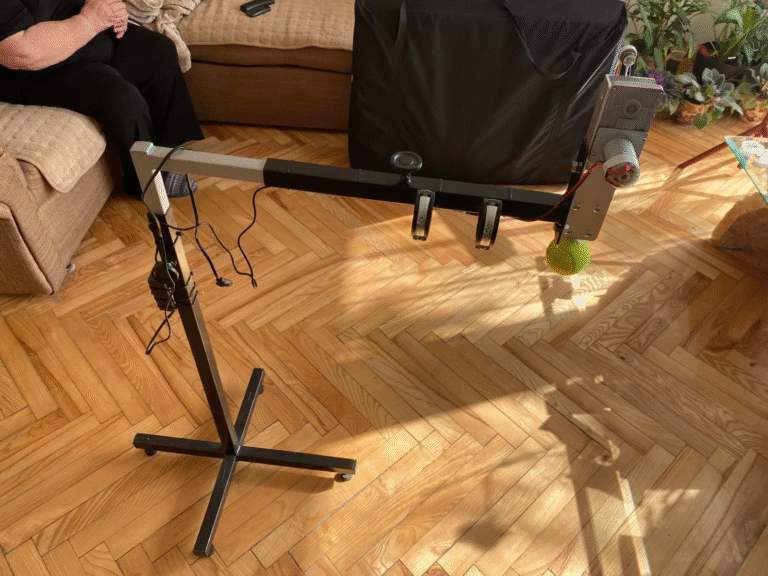
Today, he tells me that everything works great – and that he’s thrilled! He says that all he needs to do now is position the device above his bladder, press a button, and the machine does the tapping automatically.
His mother, as he says, has finally breathed a sigh of relief, since she no longer has to go through this physically tiring routine several times a day. It’s a very repetitive and exhausting process, especially for someone who is not young anymore.
Anyone with a spinal cord injury uses some form of physical stimulation to help the bladder empty. It’s the first and basic method learned during rehabilitation. Those who can, tap on their own; those who can’t – rely on someone else. Some use this method for life, while others switch to thin disposable catheters – the so-called self-catheterization. Which method one uses is simply a matter of choice and habit.
I have to admit, I felt genuinely happy and proud when he told me everything worked perfectly. One simple idea, born in a moment, now makes daily life easier for him and his mother. In my opinion, that’s the essence of everything I do – that technology should have a soul, and that every invention, no matter how small, can give someone back a piece of independence and dignity.
Congratulations, Bane – you now have a unique bladder-emptying system.
This experience reminded me once again how important it is to share ideas, even those that seem small or incidental. For someone out there, that very idea might mean a huge change in their life. And that’s why I’ll keep writing, sketching, modeling, and searching for new solutions – because every next idea might already be waiting for the person it’s meant to help.
As things stand, I’ll probably make one of these systems for myself in the near future.

Be First to Comment