
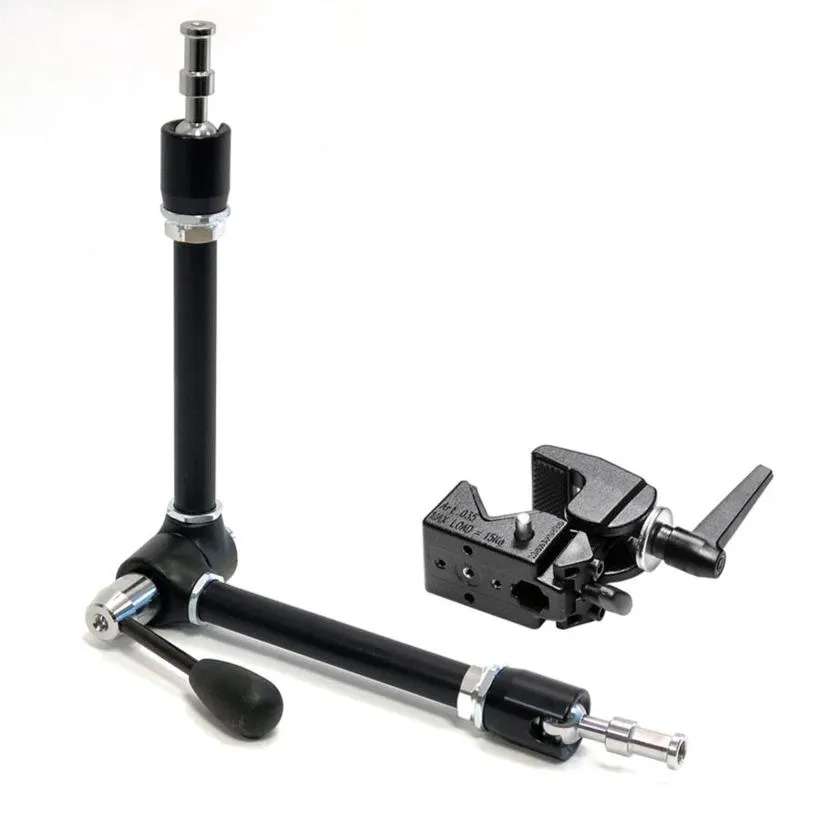
The Manfrotto Magic Arm is a flexible mount primarily designed for photo equipment. However, among people with disabilities, this “magic” arm has long been known as a reliable ally for attaching various devices and assistive tools.
Its main features are robustness and durability. It securely holds everything from communication aids and sensory devices to cameras and coffee mugs.
That’s actually its main job for me these days — it holds my cup while I work at the computer. Since I rarely take photos anymore, it’s more useful as a drink holder than a camera arm.
Photography as a hobby
Generally speaking, many people with disabilities eventually look for a creative outlet, and photography or drawing often becomes that choice. These days, technology works in our favor — devices are smaller, lighter, and everything can be connected through a smartphone. I believe that even someone with minimal hand movement could theoretically create something meaningful — with the right modifications.
Technical challenges for someone with a spinal cord injury
My love for street photography quickly ran into technical obstacles. I realized it’s harder to adapt a camera for someone who can’t use their fingers than it is to learn composition and photography techniques. My focus shifted entirely to solving the technical challenge of operating a camera.
My first problem was how to mount the camera on my wheelchair. Due to quadriplegia and my inability to use fingers or hands, I physically can’t hold the camera, let alone use its buttons or features. I had to figure out a way for it to stand in front of me and remain stable.
The solution had to be simple and easy for the person helping me set it up.
So, in addition to carrying and pulling the camera out of the bag, someone also had to mount it and prepare it for shooting. All those steps had to be done by someone else, and over time, that starts to wear people down — move it this way, adjust it that way, wipe the lens…
All those small things drained energy and made spontaneous photography impossible.
A person without a disability just throws a bag over their shoulder, goes out, pulls out the camera, takes a photo, finishes, and heads home. That’s it.
Disability is exhausting.
Eventually, you come to understand this and realize you have to conserve energy and limit your physical movements to only what’s necessary. And taking photos is, in a way, an extreme sport.
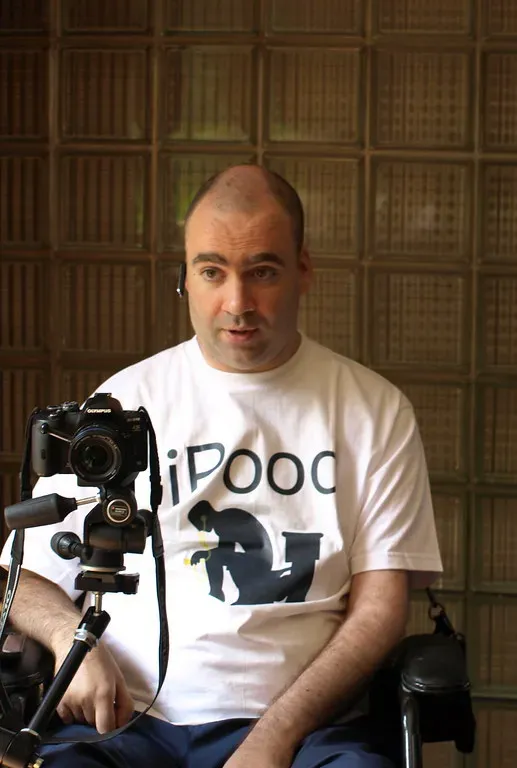
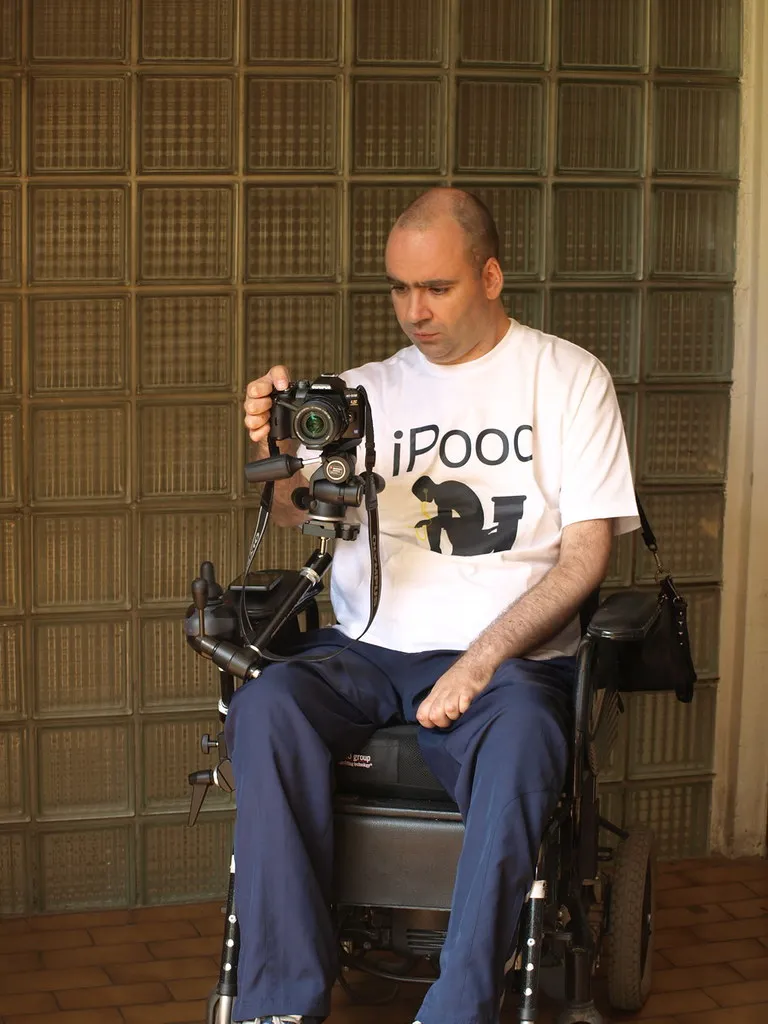
Despite everything, the Magic Arm proved to be a solid solution — the clamp was always attached to the wheelchair, the arm would just slide into place, and the camera would be secured at the end.
Modifications and improvisation
Unfortunately, you can’t clearly see in the older photos how the clamp was attached to the wheelchair, because I’ve had a different wheelchair for a while now. But you can still get an idea of how the Magic Arm looks with its adjustable head and mounted camera. The clamp stayed fixed to the wheelchair frame, and the arm just slotted in, followed by the camera.
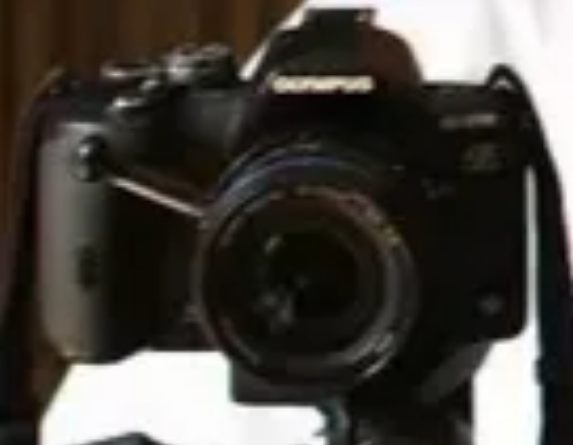
If you look closely at the photo above, you’ll see a custom-made handle we added so I could more easily rotate the focus ring on the lens.
As for the details of the handle — as far as I remember, it was just a regular metal clamp that fit snugly around the focus ring. The lever came from the internal lock mechanism of a Volkswagen Golf door. We wrapped the metal clamp with foam tape to protect the lens and plastic, and we bolted the lever through the clamp.
I actually had two of these: one for focus and one for zoom. It all worked well while I was using the camera.
This was back in 2011, when buying parts online was still complicated, so we had to come up with local solutions.
I also remember making a bite-trigger cable for the camera, since my hands got tired easily.
Even today, I use a bite switch instead of a mouse click — for the same reason: to avoid extra strain on my hands.
The power of desire vs. street reality
The idea was for the camera to always be mounted on the wheelchair, ready for street photography. But practical and safety concerns quickly popped up. A friend once warned me: “You’re going out alone with €1,000 worth of gear? Someone could just rip it off!” That made me pause.
There were moments when we’d set everything up, and after ten minutes I’d lose the desire to shoot — then I’d just roll around with a mounted camera while the person who helped me had already gone home.
The realization of physical limitations was another factor. All my photos were taken from the same height since I couldn’t change angles or move around. I quickly noticed my photos looked flat and dull. I wasn’t satisfied.
Street photography demands freedom and speed — things my body just couldn’t deliver, no matter how much I wanted it.
Today, a smartphone can replace a DSLR in about 95% of situations, which is especially useful for people with limited mobility.
A new life for old gear
These days, my Magic Arm has little to do with street photography — but it’s still in faithful service, now as a cup holder while I work.
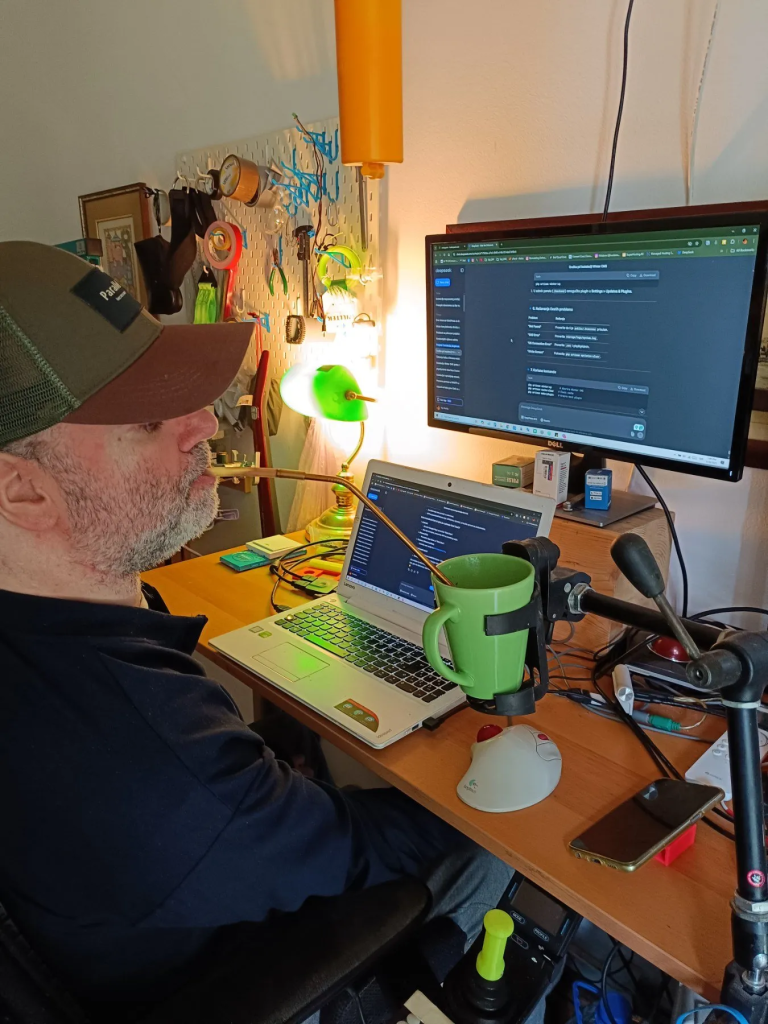
Even though I no longer take photos, the memory of that time lives on through this excellent piece of equipment that once held a camera — a passion I never fully got to explore. Today, it holds a cup of coffee. And coffee is love.
A plastic bicycle bottle holder from AliExpress fit perfectly, and the flexible arm can hold up to 1.5 kg — so there’s no need to worry about weight.
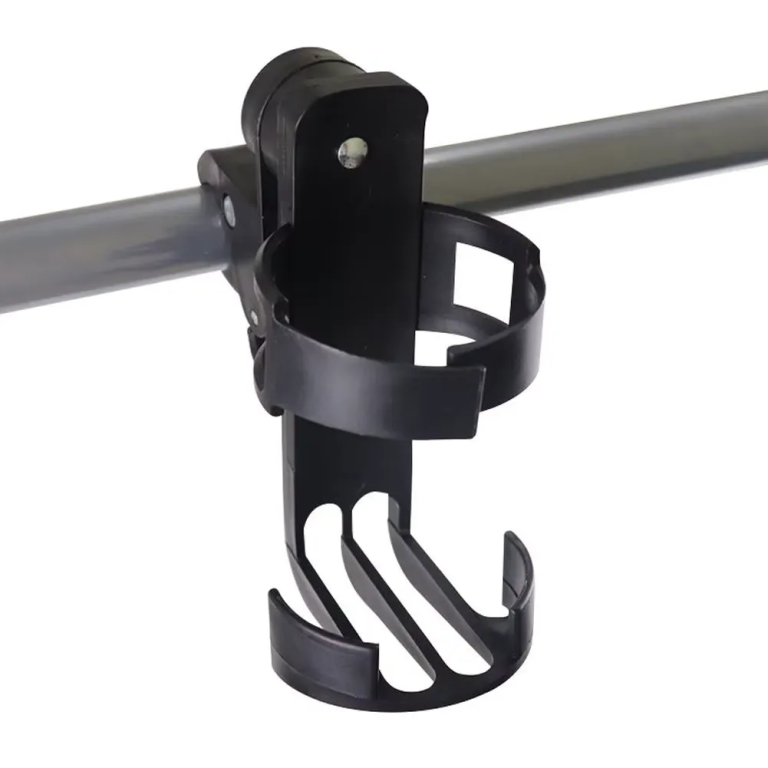
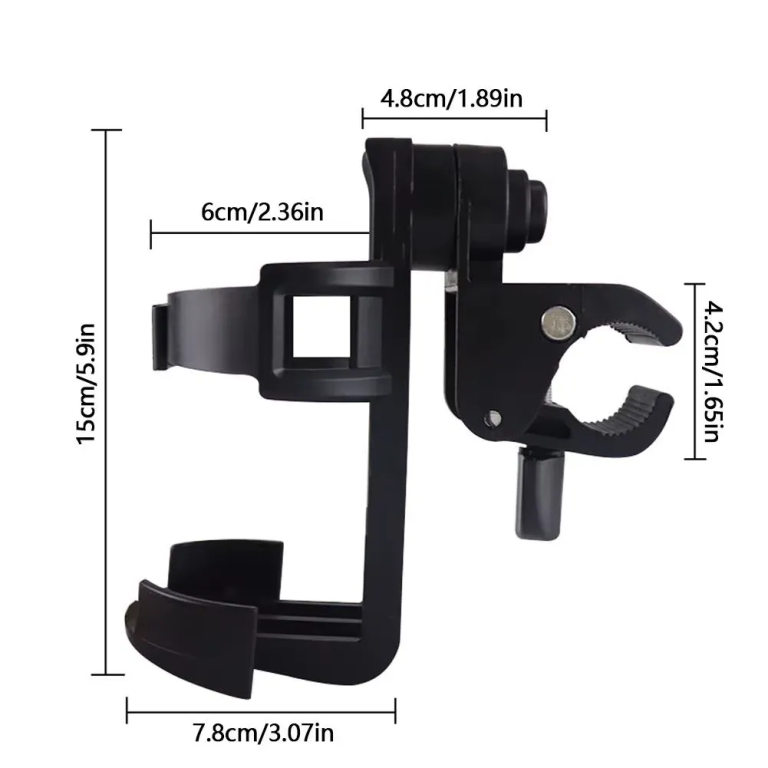
Parts list mentioned in this article:
- Manfrotto Magic Arm
- Manfrotto Super Clamp 035
- Plastic bottle holder from AliExpress
- Metal clamp and door lock lever – a DIY “focus ring” that today could easily be 3D-printed
Speaking of drinks — an essential part of the system is the straw.
You can read more at the following link: How I improved the IKEA straw for everyday use

Be First to Comment