
Aid No. 1
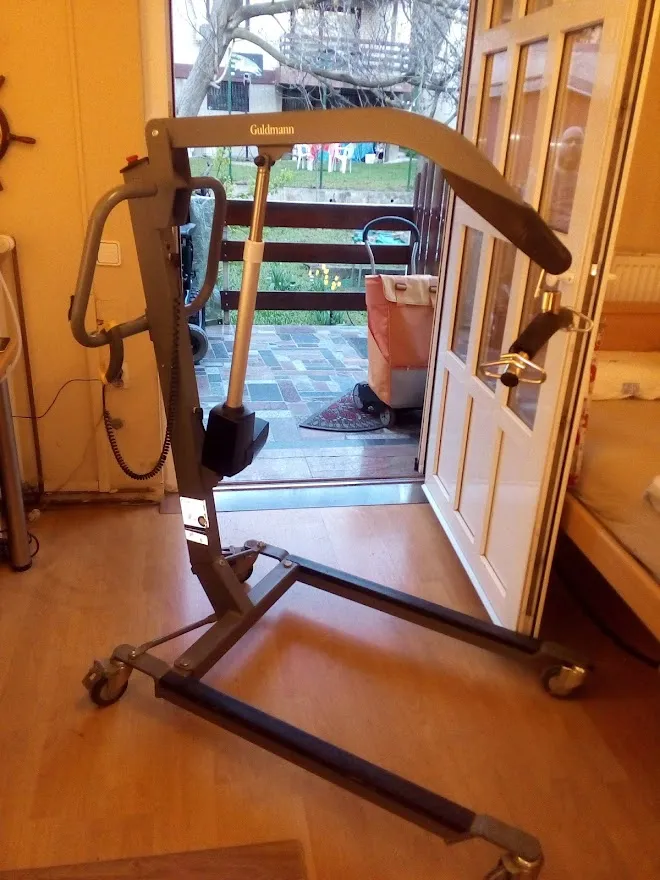
An essential tool for daily transfers between the bed and wheelchair — and vice versa. Without it, everyday life would be significantly more difficult.
There’s not much to say about the hoist, except that its help is invaluable.
After rehabilitation, when it comes to gaining independence at home, the first thing to invest in is a hoist.
It comes in two versions: hydraulic and electric.
📜 History of the mobile (bedroom) hoist
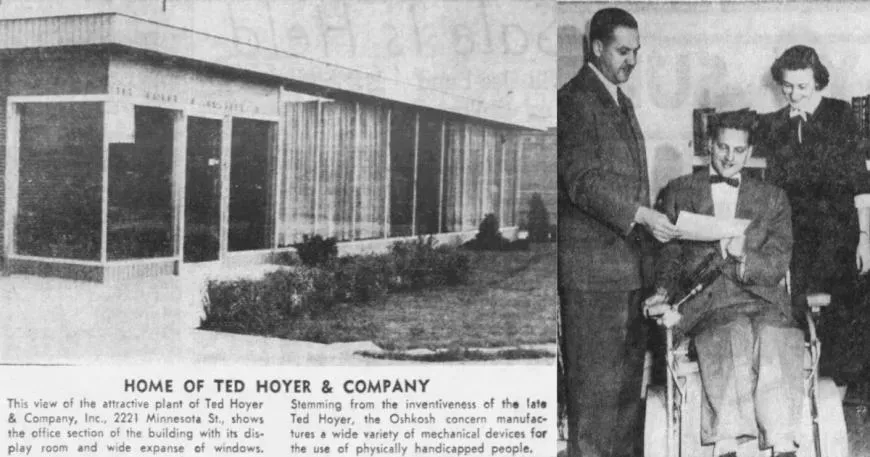
The first mobile patient hoist was developed between the 1940’s and 1950’s by Ted Hoyer, an American who became a quadriplegic after a car accident at the age of 16. Together with his cousin, Victor Hildeman, Hoyer constructed a device that allowed him to transfer independently from bed to wheelchair and back. This invention, known as the “Hoyer Lift,” became synonymous with mobile patient lifts worldwide.
In 1955, engineer John Payne commercialized the first “Oxford” mobile patient lift, which improved upon existing systems for transferring patients.
Today’s modern versions of these hoists often use electric motors, eliminating the need for manual pumping and making transfers even safer and easier for both patients and caregivers.

Be First to Comment